

Last Updated: October 28, 2026
Quick Summary
A sustainable artisan quilt is worth the investment because it is handcrafted from natural, low-impact fibers and built to last decades rather than seasons. Our handmade quilts range from $235.00 to $325.00, and organic cotton softens with each wash while keeping its breathability.
- Look for GOTS-certified organic cotton, since natural and eco-friendly are not regulated terms.
- Many of our quilts use Warm & Natural cotton batting with heirloom weight that doesn't overheat.
- Machine wash cold on a gentle cycle with mild detergent, then tumble dry low or line dry.
- Wash less often than you think; spot-clean and air quilts between uses to reduce wear.
- The 43 x 58 inch pieces work as throws, while the 59 x 73 inch Earth Love suits a bed overlay.
Table of Contents
- What Makes a Quilt Truly Sustainable?
- The Benefits of Organic Cotton Bedding in Artisan Quilts
- Comparing Sustainable Artisan Quilt Options Side by Side
- Ethical Bedding Brands Comparison: What to Look For
- How to Care for Artisan Quilts Without Damaging Them
- Pricing Breakdown: What You Pay for a Handmade Quilt
- Matching an Artisan Quilt to Your Style and Space
- Add a Handmade Quilt to Your Home Today
- Frequently Asked Questions
What Makes a Quilt Truly Sustainable?
A sustainable artisan quilt is a handcrafted textile built from natural, low-impact fibers and made to last decades, not seasons. Most bedding marketed as "eco-friendly" fails at least one.
Material comes first. Organic cotton is soft, breathable, and holds up to washing. Hemp is stronger but starts rougher. Bamboo drapes well and feels cool, though its processing varies widely.
Watch out: "chemical-free" and "non-toxic" are marketing terms, not regulated standards. Look for GOTS-certified organic cotton or other recognized organic certification on the label instead of trusting a hangtag slogan.
The Benefits of Organic Cotton Bedding in Artisan Quilts
Organic cotton brings three practical benefits to a handmade quilt: softness, breathability for temperature regulation, and durability through repeated washing. It is grown without synthetic pesticides and processed without the heavy chemical finishes common in conventional bedding, which matters for hot sleepers and sensitive skin.
The benefits of organic cotton bedding show up after a year, not on day one. Resin-treated conventional cotton feels smooth initially but can stiffen; organic cotton softens with each wash and keeps its breathability.
Many of our quilts use Warm & Natural batting, a natural cotton fill with heirloom weight that doesn't overheat.
Comparing Sustainable Artisan Quilt Options Side by Side
A useful comparison applies the same criteria to every quilt.
The comparison framework
| Quilt | Shell fiber | Batting | Construction | Care | Price |
|---|---|---|---|---|---|
| Earth Love Handmade Quilt | 100% cotton patchwork | Warm & Natural cotton | Professionally quilted | Machine wash cold, tumble low | $325.00 |
| Ripples Handmade Quilt | 100% cotton | Natural cotton | Machine quilted | Machine wash cold, tumble low | $235.00 |
| African Emerald Artisan Quilt | 100% cotton with cotton fleece backing | Warm & Natural cotton | Machine quilted | Machine wash cold, tumble low | $235.00 |
| Poppy Poppy Artisan Quilt | 100% cotton | Natural cotton | Machine quilted | Machine wash cold, tumble low | $275.00 |
| Beach Life Artisan Quilt | Cotton top with fleece backing | Natural cotton | Machine quilted | Machine wash cold, tumble low | $245.00 |
Reading the differences
Certification. Ask any maker for the fiber standard behind the cotton, such as GOTS-certified organic cotton. To see the Beach Life option's details and buy it directly, view the Beach Life Artisan Quilt. Certification is the only claim you can verify independently; "natural" and "eco-friendly" are not regulated terms.

What the framework reveals
Browse the full quilt collection to see each piece against this framework in person.
Ethical Bedding Brands Comparison: What to Look For
- Fiber named and certified, not just "natural"
- Maker or workshop identified
- Construction method stated: hand-stitched, longarm, or machine
- Care instructions included with the product
- Return policy stated clearly
For a broader view of fiber standards, the Global Organic Textile Standard sets the certification benchmark for organic fiber processing.
How to Care for Artisan Quilts Without Damaging Them
Care is where a sustainable quilt either earns its longevity or loses it. For a deeper guide, read The Best Way to Wash Handmade Quilts Without Damage. The right routine protects stitching, batting, and dyes; the wrong one shrinks cotton, fades color, and breaks down thread years before the fabric wears out.
The shared routine
- Machine wash cold on a gentle cycle
- Use mild detergent, never bleach
- Tumble dry low or line dry
- Remove promptly from the dryer
- Store in a cool, dry place when not in use
- Keep out of prolonged direct sunlight
Fiber-by-fiber care trade-offs
The shared routine hides real differences between fibers that matter if you own more than one quilt.
Wool batting (if you encounter it). Wool regulates warmth well but is sensitive to heat and agitation. Most practitioners recommend cold hand washing or a gentle machine cycle with a wool-safe detergent, and flat or line drying. Hot water can felt wool, permanently changing the quilt's texture.
Hemp and linen shells (if you encounter them). These fibers are stronger than cotton but stiffen initially and soften with washing. They tolerate the same cold gentle routine, though line drying is preferable to preserve shape. Avoid chlorine bleach entirely; it weakens cellulosic fibers.
Bamboo-derived fibers (if you encounter them). Bamboo drapes well and feels cool, but processing varies widely and some bamboo fabrics are more delicate. Follow the maker's care label closely; when in doubt, cold wash and line dry.
The environmental cost of care
The practical rule: wash less often than you think. Bed overlays and wall hangings rarely need weekly washing. Spot-clean where possible, air the quilt between uses, and reserve full washes for genuine soiling, fewer washes mean less water, energy, and wear on stitching.
Repair, resale, and end of life
When a quilt no longer suits your home, resale is realistic for handmade pieces: one-of-a-kind construction and natural fibers hold value that mass-produced blankets do not. If resale is not an option, cotton and wool quilts can often be composted or recycled through textile programs, provided the batting and shell are natural and free of synthetic backing.
Pricing Breakdown: What You Pay for a Handmade Quilt
Our quilts range from $235.00 to $325.00.
- $235.00: Ripples and African Emerald, both 43" x 60" or smaller
- $245.00: Beach Life, 43" x 58" with detailed panel work
- $275.00: Poppy Poppy, 53" x 58" with a complex central medallion
- $325.00: Earth Love, the largest at 59" x 73"
Matching an Artisan Quilt to Your Style and Space
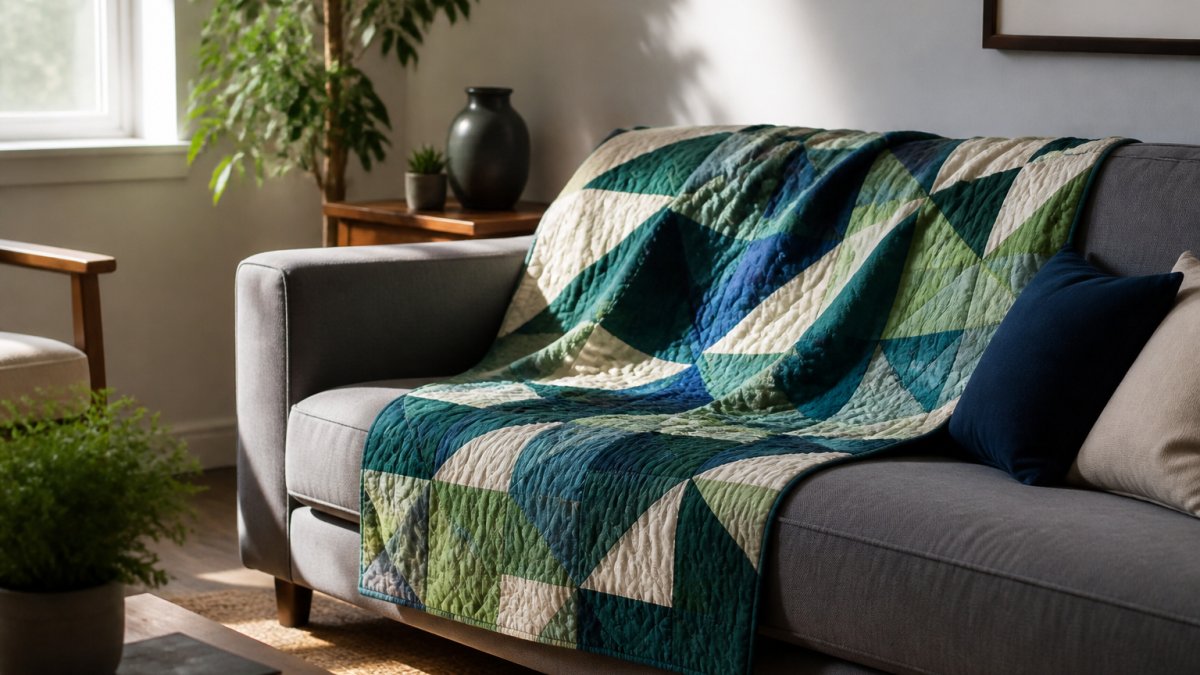
Size decides placement. The 43" x 58" pieces work as throws and wall hangings; the 59" x 73" Earth Love is the one sized for a bed overlay. Measure the space before you choose.
Add a Handmade Quilt to Your Home Today
Our quilts include handmade pieces priced from $235.00 to $325.00.
If you are weighing the Earth Love or Beach Life options, view the Earth Love Handmade Quilt for full details and dimensions.

Frequently Asked Questions
What makes a quilt considered sustainable?
A sustainable quilt uses natural fibers like organic cotton, hemp, or bamboo, and is made without harmful chemicals. Look for natural batting such as Warm & Natural, low-impact dyes, and durable construction that extends the quilt's life. Artisan quilts from Eboni & Comfort use 100% cotton tops and natural batting, which supports breathability and reduces reliance on synthetic fillers.
How do I identify authentic artisan-made quilts?
Authentic artisan quilts show visible handwork: pieced patchwork, longarm or hand stitching, and one-of-a-kind design variations. Ask for construction details and material lists. Eboni & Comfort describes each quilt's top, batting, and backing, and notes that pieces like the African Emerald Artisan Quilt use meandering longarm quilting and natural batting, which are signs of genuine craft rather than mass production.
Are GOTS-certified quilts better for the environment?
GOTS certification verifies organic fiber content and restricts harmful chemicals in processing. It is a strong indicator of lower environmental impact. For artisan quilts, certification may not always be listed, so check fiber content and batting. Eboni & Comfort quilts use 100% cotton tops and natural batting, which aligns with eco-friendly bedding goals even when a certification label is not specified.
How much maintenance do artisan quilts need?
The Poppy Poppy Artisan Quilt listing recommends machine washing on a gentle cycle with cold water, using mild detergent, avoiding bleach, and tumble drying on low heat or line drying.
The gap between a mass-produced blanket and a handmade quilt shows up in year three, not week one. Eboni & Comfort LLC builds each quilt with natural batting, 100% cotton fabrics, and longarm quilting that holds its structure through repeated washing. Browse the collection, compare the sizes and palettes, and pick the piece that fits your room. Get started with Eboni & Comfort LLC and bring a handcrafted heirloom into your home.
