

Last Updated: October 26, 2026
Quick Summary
The best way to wash handmade quilts is a gentle cycle in cold water with mild, fragrance-free liquid detergent and a color catcher sheet, washing one quilt alone. Hand-wash delicate, hand-tied, wool-batting, or antique quilts in a cool tub, and always dry flat or on low heat.
- Test a hidden corner with a damp white cloth first, since deep reds, blues, and blacks bleed most often.
- Wash one quilt at a time with no towels or zippers, and run a second rinse to flush out detergent.
- In a tub, use cool water around 80°F or below and roughly one to two teaspoons of detergent per gallon.
- Soak for 10 to 15 minutes and press water through with open palms; never wring, twist, or lift by a corner.
- Remove a machine-dried quilt 10 to 15 minutes before the cycle ends, then lay it flat to finish.
Table of Contents
- Assessing Your Quilt Before It Goes Near Water
- Can You Machine Wash a Handmade Quilt?
- Step-by-Step: The Best Way to Wash Handmade Quilts in a Machine
- Hand-Washing and Tub-Washing for Delicate or Antique Quilts
- How to Wash an Old Quilt Without Causing Damage
- The Best Detergent for Quilts and What to Avoid
- How to Dry a Quilt Safely by Size and Material
- Choosing a Quilt That Handles Care Without Fear
- Frequently Asked Questions
Assessing Your Quilt Before It Goes Near Water
The best way to wash handmade quilts starts before you touch a machine. A handmade quilt is a layered textile: a pieced top, batting in the middle, and a backing, all held together by quilting stitches. Those layers react to water at different rates, so a quick check now saves a ruined heirloom later.
Below, we walk through exactly how to wash handmade quilts without shrinking, fading, or distorting the fabric.
Check the Fabric, Batting, and Stitching
Look at the quilt closely before washing. Check the fabric content, the batting, and the quilting stitches.
- Cotton top and backing: Usually machine-washable on a gentle cycle.
- Wool or silk batting: Hand-wash only, or skip water entirely.
- Loose seams or fraying edges: Fix them first. Washing makes small tears bigger.
A common mistake is assuming every quilt is cotton. Read the label, or ask the maker.
Test for Colorfastness First
Test a small hidden corner with a damp white cloth before the full wash. Rub gently, then check the cloth.
If any dye transfers, the colors are not stable. That quilt needs cold water, a color catcher, and hand-washing rather than a machine cycle. Deep reds, blues, and blacks bleed most often, so treat rich jewel tones with extra care.
Can You Machine Wash a Handmade Quilt?
Yes, most handmade quilts can go in a washing machine, but only on a gentle or delicate cycle with cold water.
Size decides this more than anything else. A large-capacity washer handles a throw quilt well. A small machine can twist and stress a bigger quilt, which pulls at the seams.
Use this quick guide:
| Quilt Size | Machine Wash? | Best Method |
|---|---|---|
| Baby or crib (under 40 inches) | Yes | Gentle cycle, cold water |
| Lap or throw (40-60 inches) | Yes, large drum | Gentle cycle, cold water |
| Full or queen (60-90 inches) | Usually no | Tub-wash or professional clean |
| Antique or fragile | No | Spot-clean or consult a conservator |
Watch out: an overloaded drum is the top cause of seam damage. If the wet quilt fills the machine, stop and hand-wash instead.
Step-by-Step: The Best Way to Wash Handmade Quilts in a Machine
Here is the process we recommend for a machine-washable quilt. Total time is about 90 minutes, most of it hands-off.
What you'll need:
- Mild, fragrance-free liquid detergent
- A color catcher sheet
- A large-capacity washing machine
- Shake out loose dust. Take the quilt outside and shake it. This removes grit before it turns into mud in the water.
- Check for stains. Spot-clean any marks with a little mild detergent and cold water first.
- Load the quilt alone. Wash one quilt at a time. No towels, no jeans, nothing with zippers.
- Set cold water and a gentle cycle. Choose the delicate or short cycle. Cold water limits shrinkage and fading.
- Add mild detergent and a color catcher. Use less detergent than you would for clothes. Extra soap leaves residue in the batting.
- Run a second rinse. An extra rinse flushes out leftover detergent.
- Remove the quilt promptly. Do not let a wet quilt sit in the drum.
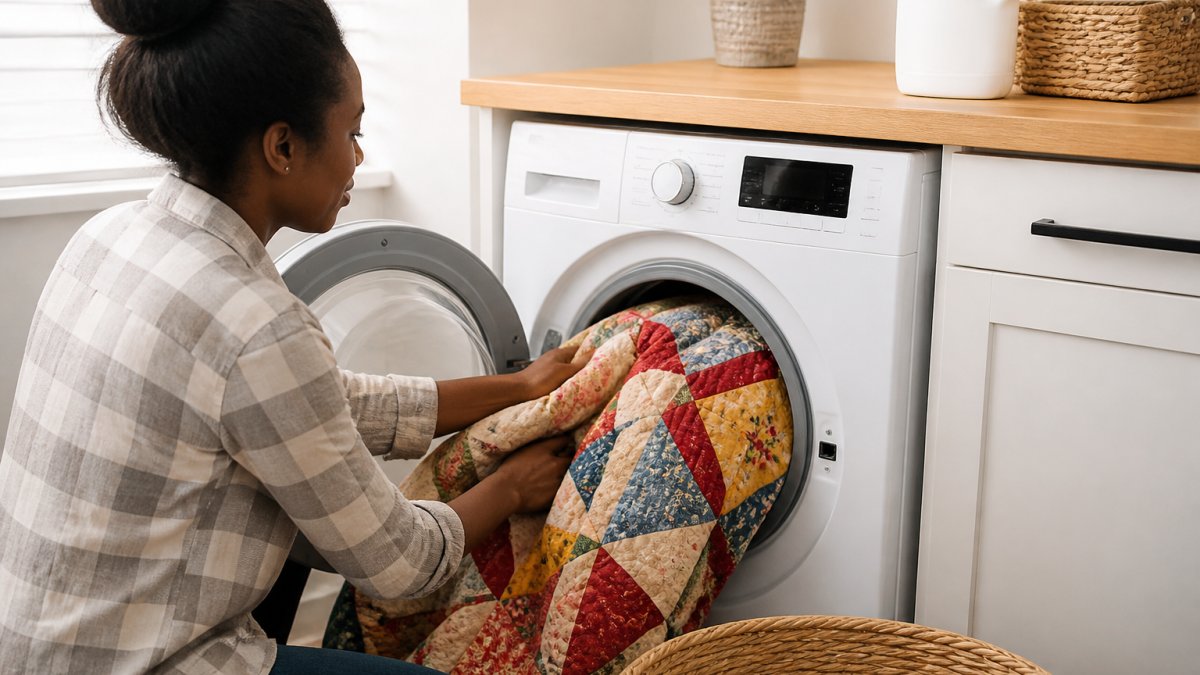
Expected result: The quilt comes out damp, evenly wet, and still square at the corners.
Hand-Washing and Tub-Washing for Delicate or Antique Quilts
Hand-washing is the safest method for delicate fabrics, hand-tied quilts, wool batting, and any quilt with loose stitching or fragile seams. It takes longer than a machine cycle, but it puts almost no mechanical stress on the layers. A controlled tub wash can prevent the stretching, seam stress, and distortion that even a gentle machine cycle can cause.
Set Up the Tub Correctly
Use a clean bathtub or a large plastic tub that has been rinsed free of soap residue. Fill it with cool water, roughly 80°F or below, comfortably cool to the touch.
Add a small amount of mild, fragrance-free liquid detergent.
If the quilt has rich reds, deep blues, or blacks, add a color catcher sheet to the tub water before the quilt goes in.
Submerge, Soak, and Press, Never Agitate
Lower the quilt into the water gently, supporting it with both arms so the wet weight does not pull on the seams.
Soak for 10 to 15 minutes. During the soak, press the water through the fabric with open palms, working from the center outward.
If you see a stain, treat it with a small amount of detergent on your fingertips and press, do not rub.
Rinse Until the Water Runs Clear
Drain the tub without lifting the quilt. Refill with clean cool water and press the water through the fabric again. Repeat the drain-and-refill cycle two to three times, or until the rinse water stays clear and free of suds. Leftover detergent attracts dirt and can yellow the fabric over time.
Lift and Dry Without Stretching
Never lift a soaked quilt by one edge. The wet weight can be several times the dry weight and will pull seams apart. Instead, gather the quilt into a loose bundle with both hands underneath, supporting as much of the fabric as possible, and transfer it to a clean towel or directly to your drying setup.
Roll the quilt in a clean, dry towel and press gently to absorb excess water. Do not twist the towel roll. Then lay the quilt flat to dry, see the drying section below for method-by-method guidance.
The American Cleaning Institute's fabric care guidance notes that cold water and gentle agitation protect delicate textiles. That advice fits quilts well, but hand-washing goes a step further by removing mechanical agitation entirely.
How to Wash an Old Quilt Without Causing Damage
An old quilt needs a different approach. Age weakens cotton fibers, and old dyes are far more likely to bleed.
Start by checking the condition. Look for thinning fabric, broken stitches, and brown spots. If the quilt is fragile, do not wash it at all.
If the quilt is sturdy enough for water, hand-wash it in a tub with cool water and a color catcher. Skip the machine entirely.
The Best Detergent for Quilts and What to Avoid
The best detergent for quilts is a mild, liquid, fragrance-free formula. Liquid dissolves better than powder, which can leave grit inside the batting.
Look for a detergent that is bleach-free, brightener-free, and perfume-free. Harsh chemicals break down cotton fibers over time and can set stains instead of lifting them.
Avoid these entirely:
- Chlorine bleach, which weakens fabric
- Optical brighteners, which can yellow older cotton
- Fabric softener, which coats fibers and traps dirt
Add a color catcher sheet to every wash. It grabs loose dye before it settles into pale patches.
How to Dry a Quilt Safely by Size and Material
Drying is where many quilts get ruined, not washing. Heat and a tumbling drum cause shrinkage, fading, and distortion, and a wet quilt is heavy enough to stretch under its own weight if it is handled carelessly. The right drying method depends on the quilt's size, materials, and construction.
Flat Drying: The Safest Default
Lay the quilt flat on a clean sheet, a drying rack, or a mesh drying surface. Smooth it gently into shape while it is still damp, this is your chance to square up the corners and edges.
Keep it out of direct sunlight, which fades dyes. A fan or open window speeds drying without adding heat. Most throw quilts take a full day; larger quilts may take 24 to 48 hours.
Flat drying is the best choice for:
- Hand-tied quilts, where ties can loosen under hanging weight
- Wool or silk batting, which can felt or distort with heat
- Antique quilts with fragile fibers
Line Drying: Use With Caution
Line drying works for sturdy cotton quilts, but a wet quilt is heavy. Drape it over two or three parallel lines to distribute the weight, or use a wide drying bar rather than a single thin line. Never clip a wet quilt by its corners, the weight will pull the shape out.
Line drying is not recommended for hand-tied quilts, wool batting, or fragile antique quilts, because the hanging weight stresses seams and ties.
Machine Drying: Low Heat or No Heat Only
If you use a dryer, choose the lowest heat setting or a no-heat air-fluff cycle. Remove the quilt while it is still slightly damp, usually 10 to 15 minutes before the cycle ends, then lay it flat to finish.
Avoid dryer sheets and fabric softener, which coat fibers and trap dirt. Clean the lint filter before every load; quilts shed lint and a clogged filter is a fire risk.
Drying by Quilt Size and Material
| Quilt Type | Best Drying Method | Avoid |
|---|---|---|
| Baby or crib (under 40 inches) | Flat dry or low-heat dryer | High heat |
| Lap or throw (40-60 inches) | Flat dry or line dry over multiple lines | Single-line hanging |
| Full or queen (60-90 inches) | Flat dry on a large surface | Line drying, which stretches |
| Hand-tied quilt | Flat dry only | Machine drying, line drying |
| Wool or silk batting | Flat dry, cool room | Any heat |
| Antique or fragile | Flat dry, shaded area | Sunlight, heat, hanging |
A Note on Mildew and Odors
If a quilt smells musty or has mildew spots, do not simply dry it and hope for the best. Mildew can set into fibers and spread. Wash the quilt using the hand-washing method above, add a color catcher, and dry it thoroughly and quickly, flat drying with a fan works well.
For nursery quilts, once your quilt is clean and dry, you may want ideas for displaying it. Our guide on how to style handmade quilts for nursery decor covers placement and draping.
Choosing a Quilt That Handles Care Without Fear
The easiest quilt to care for is one built for it. When you buy, check the care instructions before the pattern.
Our artisan quilts are made for real homes. The Ripples Handmade Quilt is a good example: machine wash on gentle cycle in cold water, use mild detergent, do not bleach, tumble dry on low heat. The Earth Love Handmade Quilt follows the same simple routine.


If you want to compare styles and sizes side by side, browse our luxury handmade quilts for sale to find one that fits your space and your routine.
Best for: anyone who wants an heirloom look without complicated upkeep. Skip if: you want a quilt you can wash on hot with everything else.
Frequently Asked Questions
Can handmade quilts be washed in the washing machine?
Most modern handmade quilts can be machine washed if the fabric, batting, and stitching are sound. Use a gentle or delicate cycle with cold water and a mild detergent, and make sure the drum is large enough that the quilt moves freely. Quilts with fragile seams, unstable dyes, or antique fabrics are safer hand-washed or tub-washed. Always test a small hidden area for colorfastness before the first full wash.
What is the best detergent for quilts with bright colors?
Choose a mild, liquid, fragrance-free detergent with no bleach, brighteners, or perfumes. Liquids dissolve more easily in cold water and rinse out of thick batting more reliably than powders. Add a color catcher sheet to the drum to absorb loose dye and reduce the risk of dye transfer between patches. Skip fabric softener, which can coat cotton fibers and reduce breathability.
How do you dry a handmade quilt without shrinking or distorting it?
Air-drying is the safest option for most quilts. Lay the quilt flat on a clean sheet or drying rack, reshape the edges while damp, and keep it out of direct sunlight. For quilts that tolerate heat, tumble dry on low with dryer balls and remove promptly to limit wrinkles. Never hang a wet quilt by one edge, because the weight of the water can stretch seams and distort the shape.
How often should a handmade quilt be washed?
Wash a quilt two to three times a year with regular use, and more often if it sits on a bed or is used by pets and children. Spot-clean small marks between washes to reduce full-cycle wear. Quilts used as wall hangings or decorative throws need washing only once a year or when visibly soiled. Frequent gentle washing is gentler on fibers than occasional harsh cleaning.
Washing a handmade quilt takes care, but it is not hard once you know the steps. The challenge is buying a quilt you can actually maintain. At Eboni & Comfort LLC, every quilt ships with clear care instructions, from the Ripples to the Dragon Love quilt. Our pieces use premium cotton and Warm & Natural batting, and they are professionally quilted for durability. Get started with Eboni & Comfort LLC and choose a handmade quilt you can wash, dry, and enjoy for years.
